Buy wehavesamecolors.eu ?
We are moving the project
wehavesamecolors.eu .
Are you interested in purchasing the domain
wehavesamecolors.eu ?
domain@kv-gmbh.de · 0541-91531010
Buy wehavesamecolors.eu ?
How does the triple mass, triple charge, and triple mass and charge of an electron affect a Wien filter?
The triple mass of an electron would increase its inertia, making it more difficult to deflect in a Wien filter. The triple charge of an electron would also increase the force experienced by the electron in the magnetic field of the Wien filter, causing it to be deflected more strongly. Additionally, the combination of triple mass and triple charge of an electron would further increase the force and inertia experienced, resulting in even greater deflection in the Wien filter. Overall, the triple mass, triple charge, and triple mass and charge of an electron would all contribute to a stronger deflection in a Wien filter. **
What is the difference between charge balance and mass balance?
Charge balance refers to the conservation of electric charge in a chemical reaction or system, ensuring that the total positive and negative charges are equal. Mass balance, on the other hand, refers to the conservation of mass, ensuring that the total mass of reactants equals the total mass of products in a chemical reaction. While charge balance focuses on the distribution of charges, mass balance focuses on the distribution of mass in a system. Both concepts are fundamental in understanding and predicting chemical reactions. **


Similar search terms for Mass-to-charge
Top-Angebote
Products related to Mass-to-charge:
-
Sarah Owen The Top 100 Juices: 100 Juices to Turbo-Charge Your Body With Vitamins and Minerals - Non Fiction - PaperbackTitle:. The Top 100 Juices: 100 Juices to Turbo-charge Your Body with Vitamins and Minerals Condition: BRAND NEW. Format: Paperback. ISBN: 9781844834471 Overview:. Unlock a pantry full of vibrant health with this compact, user-friendly guide to juicing. The Top 100 Juices invites you to explore how simple blends of fruit, vegetables, and superfood ingredients can boost energy, support immunity, and nurture everyday vitality. Inside you’ll discover 100 meticulously described juice recipes, from familiar favourites like apple and carrot to adventurous pairings featuring goji berries and acai. Each entry offers a clear breakdown of potential health benefits, a practical preparation tip, and a complete nutrition snapshot to help you track your intake. The book is built on the idea that juicing should fit real life: quick to assemble, easy to tailor, and delicious enough to become a daily habit. The tone is friendly and non-technical, guiding even complete beginners to craft flavour-balanced mixes with confidence. Whether you’re looking for a morning wake-up, a post-workout boost, or a hydrating alternative to sugary drinks, this guide makes it easy to integrate juice into your routine. Compact enough to sit on a kitchen shelf or slip into a bag, it’s ideal for busy families, students, and anyone curious about healthier, tastier living through juicing. What Makes This Book Stand Out:. More than a collection of recipes, this book is a practical toolkit for everyday wellness. The standout feature is its breadth: 100 distinct juice ideas that cover the taste spectrum from crisp, refreshing greens to tropical sweet treats. Each entry pairs a suggested serving with straightforward health notes—calorie-conscious options, vitamin highlights, and mindful tips on ingredient combinations that maximise flavour and nutrition. The layout is designed for quick reference: ingredient lists, step-by-step instructions, and a short health note you can skim while you prep. The author’s voice is encouraging, making juicing feel accessible rather than intimidating. The recipes are adaptable to different diets—vegetarian, vegan, or dairy-free—and you’ll find budget-friendly substitutions that still deliver on taste. This book also supports habit-building: practical tips for shopping, batch-prep, and storage ensure you waste less and juice more. Whether you’re decorating a weekly meal plan or searching for a family-friendly activity, the Top 100 Juices offers dependable, delicious options that turn healthy intentions into concrete, enjoyable routines. Who This Book Is Perfect For:. Whether you’re a complete beginner curious about juicing or a seasoned smoothie lover seeking new inspiration, this book is for you. It suits busy professionals who want quick, nutritious options, parents aiming to add more fruit and veg to family meals, students managing a tight budget, and fitness enthusiasts who value post-workout hydration. It also makes a thoughtful gift for health-conscious...99,99 £*Shipping: 0,00 £Secure redirect to the provider
-
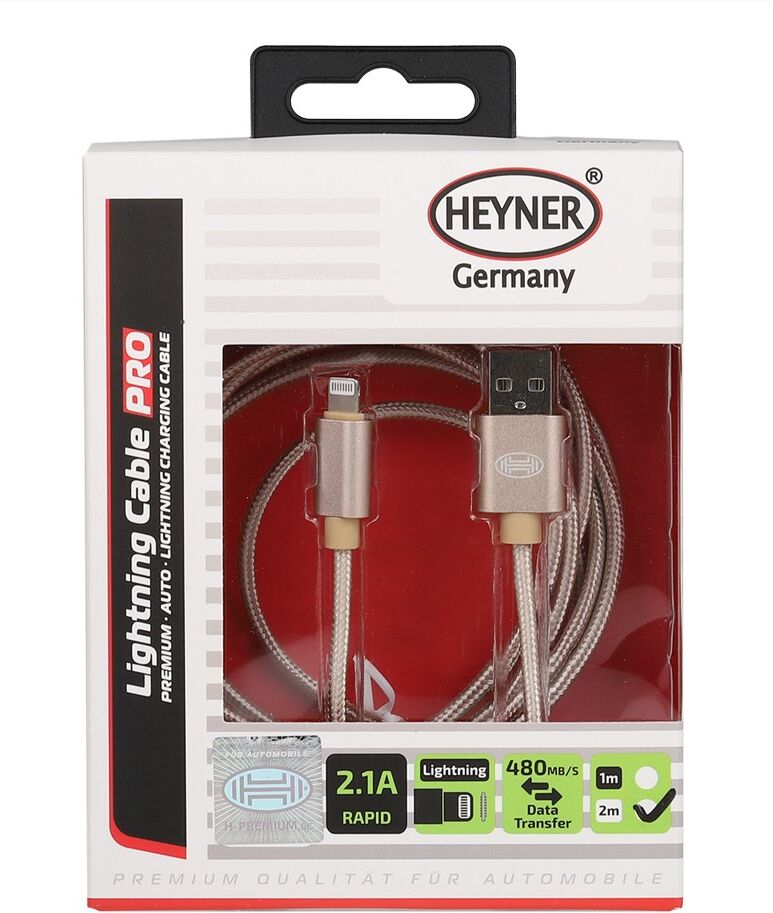
SWISSTEN 71523301 USB charge cableCable Length [m]: 2.0; Plug Type: Lightning, USB type-A; Cable Colour: black; Product line: Data; reinforced version: ; Current Strength [A]: 3; Cable size from [AWG]: 22 (0,64/0,32); Cable size to [AWG]: 28 (0,32/0,080); Insulation Material: TPE (thermoplastic elastomer); Housing material: Aluminium; Surface: Anodized6,59 £*Shipping: 8,45 £Secure redirect to the provider



-
What is the difference between charge balancing and mass balancing?
Charge balancing refers to ensuring that the total positive and negative charges in a chemical reaction are equal, while mass balancing involves ensuring that the total mass of reactants equals the total mass of products in a chemical reaction. Charge balancing is important in redox reactions to maintain electrical neutrality, while mass balancing is crucial to uphold the law of conservation of mass. Both types of balancing are essential in chemical reactions to ensure that the reaction proceeds correctly and that the stoichiometry is maintained. **
-
How can one calculate the field strength from mass and charge?
To calculate the field strength from mass and charge, one can use the formula for the electric field strength, which is given by E = k * (q / r^2), where E is the electric field strength, k is the Coulomb constant, q is the charge, and r is the distance from the charge. By knowing the charge and the distance from the charge, one can calculate the electric field strength. Additionally, if the mass is involved, one can use the formula for gravitational field strength, which is given by g = G * (m / r^2), where g is the gravitational field strength, G is the gravitational constant, m is the mass, and r is the distance from the mass. By knowing the mass and the distance from the mass, one can calculate the gravitational field strength. **
-
How does the mass change when the charge is changed in physics?
In physics, the mass of an object does not change when the charge is changed. Mass is a fundamental property of an object that remains constant, regardless of changes in its charge. This is a fundamental principle in physics known as the conservation of mass. However, changes in charge can affect the electromagnetic force experienced by the object, leading to changes in its motion and behavior. **
-
Is atomic mass u equal to molar mass m?
No, atomic mass (u) is the mass of a single atom of an element, while molar mass (m) is the mass of one mole of atoms of that element. Molar mass is calculated by summing the atomic masses of all the atoms in a molecule or formula unit. Therefore, atomic mass and molar mass are related but not equal. **

What does "center of mass coincides with the center of charge" mean in chemistry?
In chemistry, the center of mass refers to the average position of the mass of an object, while the center of charge refers to the average position of the charge of an object. When the center of mass coincides with the center of charge, it means that the average position of the mass of an object is the same as the average position of the charge of the object. This is important in understanding the behavior of molecules and ions, as it helps to predict their movement and interactions with other particles. **
What are the differences between mass number, atomic number, and nuclear charge in chemistry?
The mass number of an atom is the total number of protons and neutrons in its nucleus, while the atomic number is the number of protons in the nucleus. The nuclear charge is the total positive charge of the nucleus, which is equal to the atomic number. Therefore, the mass number and atomic number are specific to an individual atom, while the nuclear charge is a general term referring to the total positive charge of the nucleus. These three terms are important in understanding the structure and properties of atoms and elements in chemistry. **
Top-Angebote
Products related to Mass-to-charge:
-
Harriet Muncaster Mirabelle Collection 4 Books Set (Takes Charge, Wants to Win,Haunted House,Midnight Feast)Description. Titles in the Set:. Mirabelle Takes Charge. Mirabelle Wants to Win. Mirabelle and the Haunted House. Mirabelle and the Midnight Feast. Condition :BRAND NEW. Format :Paperback. ISBN : 9782947972909. Mirabelle Takes Charge. Mirabelle is desperate for a brand-new pair of magical roller skates, but Mum and Dad say she's got to earn the money to pay for them herself. Earning money sounds tricky-how's she going to do it? Of course! She'll set up a business. But a business doing what. . . ?. Mirabelle Wants to Win. A big football star is coming to Mirabelle's school to watch them play, and Mirabelle is determined to impress her. With a sprinkling of magic on her shoes, and a little bit of potion on the ball, she's bound to be the best!But things don't quite go to plan, and with flying footballs, out-of-control shoes, and upset teammates, Mirabelle's dreams of glory don't look like they're about to come true.Can Mirabelle discover that there's more than one way to feel like a winner?. Mirabelle and the Haunted House. When Mirabelle's pet dragon disappears into a creepy cottage in the forest, Mirabelle and her brother Wilbur have no choice but to go after her. But the two just can't get along, and Mirabelle gets so cross that she says she wishes Wilbur would disappear. She doesn't mean for it to actually happen though!. Mirabelle and the Midnight Feast. Mirabelle is having a sleepover at her best friend Carlotta's house, and the pair have been told they are absolutely not allowed to go in big sister Edith's bedroom. Surely a little look can't hurt, so they decide to sneak in when Edith goes out. But while exploring, they accidentally break one of Edith's treasured possessions. Mirabelle and Carlotta are going to be in big trouble if Edith finds out. What are they going to do?.... About the Author:. Harriet Muncaster (born 1988) is a British author and illustrator, famous for the hugely popular Isadora Moon series (half-fairy, half-vampire), along with other magical books like Mirabelle, Emerald, and Victoria Stitch. A graduate in Fine Arts, she combines writing and illustrating, with her popular books translated into many languages and even becoming an animated series for Sky Kids, showcasing themes of difference and self-acceptance.. Title. Harriet Muncaster Mirabelle Collection 4 Books Set (Takes Charge, Wants to Win,Haunted House,Midnight Feast). Delivery. Content. Reviews23,99 £*Shipping: 2,99 £Secure redirect to the provider
-
Uplift Treasures 20L Automatic Smart Sensor Trash Can Waterproof Large Capacity black Charge chargeProduct Description: Upgrade your waste management with this 20 L automatic smart trash can featuring a motion sensor for touchfree operation and a waterproof design ideal for bathrooms, kitchens, offices, and living rooms. Its large capacity...190,97 $*Shipping: 0,00 $Secure redirect to the provider
-
Sarah Owen The Top 100 Juices: 100 Juices to Turbo-Charge Your Body With Vitamins and Minerals - Non Fiction - PaperbackTitle:. The Top 100 Juices: 100 Juices to Turbo-charge Your Body with Vitamins and Minerals Condition: BRAND NEW. Format: Paperback. ISBN: 9781844834471 Overview:. Unlock a pantry full of vibrant health with this compact, user-friendly guide to juicing. The Top 100 Juices invites you to explore how simple blends of fruit, vegetables, and superfood ingredients can boost energy, support immunity, and nurture everyday vitality. Inside you’ll discover 100 meticulously described juice recipes, from familiar favourites like apple and carrot to adventurous pairings featuring goji berries and acai. Each entry offers a clear breakdown of potential health benefits, a practical preparation tip, and a complete nutrition snapshot to help you track your intake. The book is built on the idea that juicing should fit real life: quick to assemble, easy to tailor, and delicious enough to become a daily habit. The tone is friendly and non-technical, guiding even complete beginners to craft flavour-balanced mixes with confidence. Whether you’re looking for a morning wake-up, a post-workout boost, or a hydrating alternative to sugary drinks, this guide makes it easy to integrate juice into your routine. Compact enough to sit on a kitchen shelf or slip into a bag, it’s ideal for busy families, students, and anyone curious about healthier, tastier living through juicing. What Makes This Book Stand Out:. More than a collection of recipes, this book is a practical toolkit for everyday wellness. The standout feature is its breadth: 100 distinct juice ideas that cover the taste spectrum from crisp, refreshing greens to tropical sweet treats. Each entry pairs a suggested serving with straightforward health notes—calorie-conscious options, vitamin highlights, and mindful tips on ingredient combinations that maximise flavour and nutrition. The layout is designed for quick reference: ingredient lists, step-by-step instructions, and a short health note you can skim while you prep. The author’s voice is encouraging, making juicing feel accessible rather than intimidating. The recipes are adaptable to different diets—vegetarian, vegan, or dairy-free—and you’ll find budget-friendly substitutions that still deliver on taste. This book also supports habit-building: practical tips for shopping, batch-prep, and storage ensure you waste less and juice more. Whether you’re decorating a weekly meal plan or searching for a family-friendly activity, the Top 100 Juices offers dependable, delicious options that turn healthy intentions into concrete, enjoyable routines. Who This Book Is Perfect For:. Whether you’re a complete beginner curious about juicing or a seasoned smoothie lover seeking new inspiration, this book is for you. It suits busy professionals who want quick, nutritious options, parents aiming to add more fruit and veg to family meals, students managing a tight budget, and fitness enthusiasts who value post-workout hydration. It also makes a thoughtful gift for health-conscious...99,99 £*Shipping: 0,00 £Secure redirect to the provider
-
How does the triple mass, triple charge, and triple mass and charge of an electron affect a Wien filter?
The triple mass of an electron would increase its inertia, making it more difficult to deflect in a Wien filter. The triple charge of an electron would also increase the force experienced by the electron in the magnetic field of the Wien filter, causing it to be deflected more strongly. Additionally, the combination of triple mass and triple charge of an electron would further increase the force and inertia experienced, resulting in even greater deflection in the Wien filter. Overall, the triple mass, triple charge, and triple mass and charge of an electron would all contribute to a stronger deflection in a Wien filter. **
-
What is the difference between charge balance and mass balance?
Charge balance refers to the conservation of electric charge in a chemical reaction or system, ensuring that the total positive and negative charges are equal. Mass balance, on the other hand, refers to the conservation of mass, ensuring that the total mass of reactants equals the total mass of products in a chemical reaction. While charge balance focuses on the distribution of charges, mass balance focuses on the distribution of mass in a system. Both concepts are fundamental in understanding and predicting chemical reactions. **
-
What is the difference between charge balancing and mass balancing?
Charge balancing refers to ensuring that the total positive and negative charges in a chemical reaction are equal, while mass balancing involves ensuring that the total mass of reactants equals the total mass of products in a chemical reaction. Charge balancing is important in redox reactions to maintain electrical neutrality, while mass balancing is crucial to uphold the law of conservation of mass. Both types of balancing are essential in chemical reactions to ensure that the reaction proceeds correctly and that the stoichiometry is maintained. **
-
How can one calculate the field strength from mass and charge?
To calculate the field strength from mass and charge, one can use the formula for the electric field strength, which is given by E = k * (q / r^2), where E is the electric field strength, k is the Coulomb constant, q is the charge, and r is the distance from the charge. By knowing the charge and the distance from the charge, one can calculate the electric field strength. Additionally, if the mass is involved, one can use the formula for gravitational field strength, which is given by g = G * (m / r^2), where g is the gravitational field strength, G is the gravitational constant, m is the mass, and r is the distance from the mass. By knowing the mass and the distance from the mass, one can calculate the gravitational field strength. **
Similar search terms for Mass-to-charge
-
SWISSTEN 71523301 USB charge cableCable Length [m]: 2.0; Plug Type: Lightning, USB type-A; Cable Colour: black; Product line: Data; reinforced version: ; Current Strength [A]: 3; Cable size from [AWG]: 22 (0,64/0,32); Cable size to [AWG]: 28 (0,32/0,080); Insulation Material: TPE (thermoplastic elastomer); Housing material: Aluminium; Surface: Anodized6,59 £*Shipping: 8,45 £Secure redirect to the provider
-
How does the mass change when the charge is changed in physics?
In physics, the mass of an object does not change when the charge is changed. Mass is a fundamental property of an object that remains constant, regardless of changes in its charge. This is a fundamental principle in physics known as the conservation of mass. However, changes in charge can affect the electromagnetic force experienced by the object, leading to changes in its motion and behavior. **
-
Is atomic mass u equal to molar mass m?
No, atomic mass (u) is the mass of a single atom of an element, while molar mass (m) is the mass of one mole of atoms of that element. Molar mass is calculated by summing the atomic masses of all the atoms in a molecule or formula unit. Therefore, atomic mass and molar mass are related but not equal. **
-
What does "center of mass coincides with the center of charge" mean in chemistry?
In chemistry, the center of mass refers to the average position of the mass of an object, while the center of charge refers to the average position of the charge of an object. When the center of mass coincides with the center of charge, it means that the average position of the mass of an object is the same as the average position of the charge of the object. This is important in understanding the behavior of molecules and ions, as it helps to predict their movement and interactions with other particles. **
-
What are the differences between mass number, atomic number, and nuclear charge in chemistry?
The mass number of an atom is the total number of protons and neutrons in its nucleus, while the atomic number is the number of protons in the nucleus. The nuclear charge is the total positive charge of the nucleus, which is equal to the atomic number. Therefore, the mass number and atomic number are specific to an individual atom, while the nuclear charge is a general term referring to the total positive charge of the nucleus. These three terms are important in understanding the structure and properties of atoms and elements in chemistry. **
* All prices are inclusive of VAT and, if applicable, plus shipping costs. The offer information is based on the details provided by the respective shop and is updated through automated processes. Real-time updates do not occur, so deviations can occur in individual cases. ** Note: Parts of this content were created by AI.