Buy wehavesamecolors.eu ?
We are moving the project
wehavesamecolors.eu .
Are you interested in purchasing the domain
wehavesamecolors.eu ?
domain@kv-gmbh.de · 0541-91531010
Buy wehavesamecolors.eu ?
How are coordinating conjunctions formed?
Coordinating conjunctions are formed by joining two independent clauses or words together. They are typically short words such as "and," "but," "or," "nor," "for," "so," and "yet." These conjunctions are used to connect words, phrases, or clauses that have equal importance in a sentence. **
What does coordination or coordinating mean?
Coordination or coordinating refers to the process of organizing, synchronizing, and harmonizing different activities or efforts to achieve a common goal. It involves ensuring that all elements work together smoothly and efficiently towards a shared objective. Effective coordination is essential in various settings, such as businesses, organizations, and teams, to maximize productivity and achieve desired outcomes. **
Similar search terms for Scholastic
Top-Angebote
Products related to Scholastic:
-
Scholastic Teaching Resources Scholastic Success With Grade 5 Value PackReinforce key skills with these exciting practice books!This set includes:Scholastic Success With Grade 5: Fractions & DecimalsScholastic Success With Grade 5: GrammarScholastic Success With Grade 5: MathScholastic Success With Grade 5: Math...41,59 $*Shipping: 0,00 $Secure redirect to the provider
-
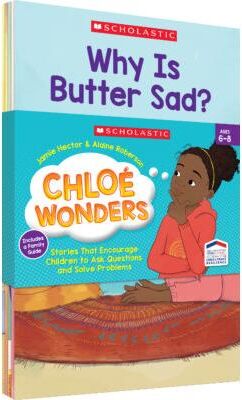
Scholastic Chloe WondersIntroducing Chloé - a curious kid with a lot of heart. Based on the real-life daughter of actor Jamie Hector, Chloé asks questions most children wonder about and builds key social-emotional skills as she solves them with her family's help. She...22,47 $*Shipping: 0,00 $Secure redirect to the provider
-
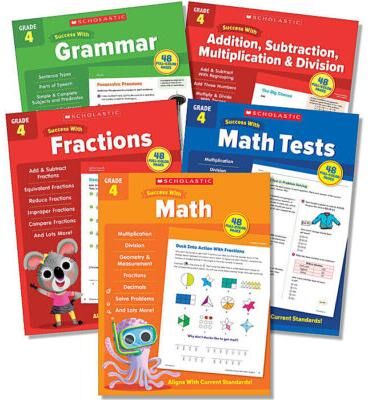
Scholastic - Children's Activity Books & Workbooks Scholastic Success With Grade 4 Value PackReinforce key skills with these exciting practice books!This set includes:Scholastic Success With Grade 4: Addition, Subtraction, Multiplication & DivisionScholastic Success With Grade 4: FractionsScholastic Success With Grade 4: GrammarScholastic...47,53 $*Shipping: 0,00 $Secure redirect to the provider
-
Scholastic - Children's Activity Books & Workbooks Scholastic Success With Grade 3 Value PackReinforce key skills with these exciting practice books!This set includes:Scholastic Success With Grade 3: Addition & SubtractionScholastic Success With Grade 3: GrammarScholastic Success With Grade 3: MathScholastic Success With Grade 3: Math...53,47 $*Shipping: 0,00 $Secure redirect to the provider


-
What are coordinating and subordinating conjunctions?
Coordinating conjunctions are words that connect two independent clauses or words of equal importance in a sentence, such as "and," "but," "or," "nor," "for," "so," and "yet." They are used to join elements that are grammatically equal. Subordinating conjunctions, on the other hand, are words that connect an independent clause with a dependent clause, indicating a relationship of dependence or hierarchy between the two clauses. Examples of subordinating conjunctions include "because," "although," "since," "while," "if," and "when." **
-
Is it a subordinating or coordinating conjunction?
The word "because" is a subordinating conjunction. It introduces a dependent clause and connects it to an independent clause, indicating a cause-and-effect relationship. Subordinating conjunctions like "because" help to show the relationship between the two clauses and indicate which is more important. **
-
How are coordinating conjunctions formed in a sentence?
Coordinating conjunctions are formed by placing them between two independent clauses or words to connect them. Common coordinating conjunctions include words like "and," "but," "or," "so," "for," "nor," and "yet." These conjunctions help to show the relationship between the two parts of a sentence, whether they are contrasting ideas (but), similar ideas (and), or alternatives (or). **
-
Are complementary events disjoint?
Complementary events are not necessarily disjoint. Complementary events are two events that together cover all possible outcomes of an experiment. Disjoint events, on the other hand, are events that have no outcomes in common. While complementary events are mutually exclusive, they can still have some outcomes in common, unlike disjoint events. **

What are complementary colors?
Complementary colors are pairs of colors that are located directly opposite each other on the color wheel. When placed next to each other, complementary colors create a strong contrast and enhance each other's intensity. Examples of complementary color pairs include red and green, blue and orange, and yellow and purple. **
Why do some people like to wear matching outfits or similar clothing in a relationship?
Some people like to wear matching outfits or similar clothing in a relationship because it can create a sense of unity and togetherness. It can be a way for couples to visually express their connection and solidarity with each other. Additionally, matching outfits can be a fun and playful way for couples to show off their relationship and share a sense of belonging with each other. Overall, wearing matching or similar clothing can be a way for couples to outwardly display their bond and connection with each other. **
Top-Angebote
Products related to Scholastic:
-
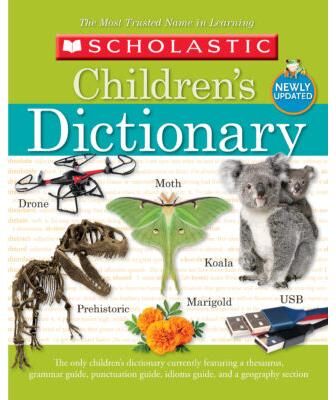
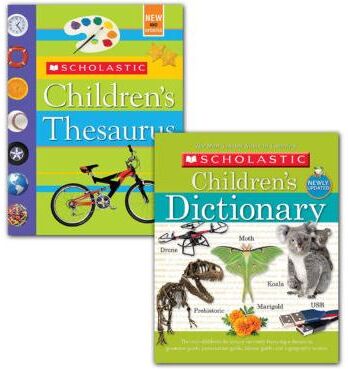
Scholastic Reference Scholastic Children's Dictionary (2019) (Hardcover) - ScholasticScholastic's trusted Children's Dictionary is back and bursting with up-to-date information on contemporary technological, scientific, and cultural terms, hundreds of new words, and in-depth sidebars featuring bold, colorful images. Featuring more...21,99 $*Shipping: 0,00 $Secure redirect to the provider
-
Scholastic Teaching Resources Scholastic Success With Grade 5 Value PackReinforce key skills with these exciting practice books!This set includes:Scholastic Success With Grade 5: Fractions & DecimalsScholastic Success With Grade 5: GrammarScholastic Success With Grade 5: MathScholastic Success With Grade 5: Math...41,59 $*Shipping: 0,00 $Secure redirect to the provider
-
Scholastic Chloe WondersIntroducing Chloé - a curious kid with a lot of heart. Based on the real-life daughter of actor Jamie Hector, Chloé asks questions most children wonder about and builds key social-emotional skills as she solves them with her family's help. She...22,47 $*Shipping: 0,00 $Secure redirect to the provider
-
How are coordinating conjunctions formed?
Coordinating conjunctions are formed by joining two independent clauses or words together. They are typically short words such as "and," "but," "or," "nor," "for," "so," and "yet." These conjunctions are used to connect words, phrases, or clauses that have equal importance in a sentence. **
-
What does coordination or coordinating mean?
Coordination or coordinating refers to the process of organizing, synchronizing, and harmonizing different activities or efforts to achieve a common goal. It involves ensuring that all elements work together smoothly and efficiently towards a shared objective. Effective coordination is essential in various settings, such as businesses, organizations, and teams, to maximize productivity and achieve desired outcomes. **
-
What are coordinating and subordinating conjunctions?
Coordinating conjunctions are words that connect two independent clauses or words of equal importance in a sentence, such as "and," "but," "or," "nor," "for," "so," and "yet." They are used to join elements that are grammatically equal. Subordinating conjunctions, on the other hand, are words that connect an independent clause with a dependent clause, indicating a relationship of dependence or hierarchy between the two clauses. Examples of subordinating conjunctions include "because," "although," "since," "while," "if," and "when." **
-
Is it a subordinating or coordinating conjunction?
The word "because" is a subordinating conjunction. It introduces a dependent clause and connects it to an independent clause, indicating a cause-and-effect relationship. Subordinating conjunctions like "because" help to show the relationship between the two clauses and indicate which is more important. **
Similar search terms for Scholastic
-
Scholastic - Children's Activity Books & Workbooks Scholastic Success With Grade 4 Value PackReinforce key skills with these exciting practice books!This set includes:Scholastic Success With Grade 4: Addition, Subtraction, Multiplication & DivisionScholastic Success With Grade 4: FractionsScholastic Success With Grade 4: GrammarScholastic...47,53 $*Shipping: 0,00 $Secure redirect to the provider
-
Scholastic - Children's Activity Books & Workbooks Scholastic Success With Grade 3 Value PackReinforce key skills with these exciting practice books!This set includes:Scholastic Success With Grade 3: Addition & SubtractionScholastic Success With Grade 3: GrammarScholastic Success With Grade 3: MathScholastic Success With Grade 3: Math...53,47 $*Shipping: 0,00 $Secure redirect to the provider
-
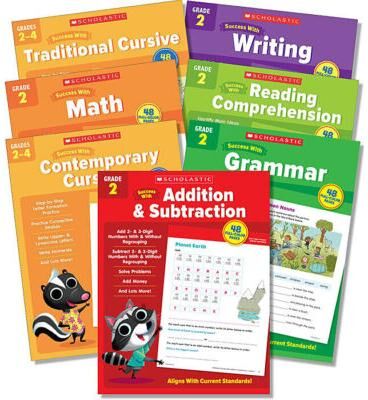
Scholastic - Children's Activity Books & Workbooks Scholastic Success With Grade 2 Value PackReinforce key skills with these exciting practice books!This set includes:Scholastic Success With Grade 2: Addition & SubtractionScholastic Success With Grade 2: GrammarScholastic Success With Grade 2: MathScholastic Success With Grade 2: Reading...41,59 $*Shipping: 0,00 $Secure redirect to the provider
-
Library Builders: Scholastic FocusScholastic Focus is the premier home of thoroughly researched, beautifully written, and thoughtfully designed works of narrative nonfiction aimed at middle grade and young adult readers. These books help readers learn about the world in which they...83,99 $*Shipping: 0,00 $Secure redirect to the provider
-
How are coordinating conjunctions formed in a sentence?
Coordinating conjunctions are formed by placing them between two independent clauses or words to connect them. Common coordinating conjunctions include words like "and," "but," "or," "so," "for," "nor," and "yet." These conjunctions help to show the relationship between the two parts of a sentence, whether they are contrasting ideas (but), similar ideas (and), or alternatives (or). **
-
Are complementary events disjoint?
Complementary events are not necessarily disjoint. Complementary events are two events that together cover all possible outcomes of an experiment. Disjoint events, on the other hand, are events that have no outcomes in common. While complementary events are mutually exclusive, they can still have some outcomes in common, unlike disjoint events. **
-
What are complementary colors?
Complementary colors are pairs of colors that are located directly opposite each other on the color wheel. When placed next to each other, complementary colors create a strong contrast and enhance each other's intensity. Examples of complementary color pairs include red and green, blue and orange, and yellow and purple. **
-
Why do some people like to wear matching outfits or similar clothing in a relationship?
Some people like to wear matching outfits or similar clothing in a relationship because it can create a sense of unity and togetherness. It can be a way for couples to visually express their connection and solidarity with each other. Additionally, matching outfits can be a fun and playful way for couples to show off their relationship and share a sense of belonging with each other. Overall, wearing matching or similar clothing can be a way for couples to outwardly display their bond and connection with each other. **
* All prices are inclusive of VAT and, if applicable, plus shipping costs. The offer information is based on the details provided by the respective shop and is updated through automated processes. Real-time updates do not occur, so deviations can occur in individual cases. ** Note: Parts of this content were created by AI.