Buy wehavesamecolors.eu ?
We are moving the project
wehavesamecolors.eu .
Are you interested in purchasing the domain
wehavesamecolors.eu ?
domain@kv-gmbh.de · 0541-91531010
Buy wehavesamecolors.eu ?
How can one determine the third side of a triangle using the theorem of concurrency?
To determine the third side of a triangle using the theorem of concurrency, one can first identify the point of concurrency of the three angle bisectors or medians of the triangle. Once this point is found, draw lines from this point to the vertices of the triangle to create three smaller triangles. By using the properties of these smaller triangles, one can calculate the length of the third side of the original triangle. This method relies on the fact that the point of concurrency divides the medians or angle bisectors in a specific ratio, allowing for the determination of the third side. **
How are coordinating conjunctions formed?
Coordinating conjunctions are formed by joining two independent clauses or words together. They are typically short words such as "and," "but," "or," "nor," "for," "so," and "yet." These conjunctions are used to connect words, phrases, or clauses that have equal importance in a sentence. **


Similar search terms for Concurrency
Top-Angebote
Products related to Concurrency:
-
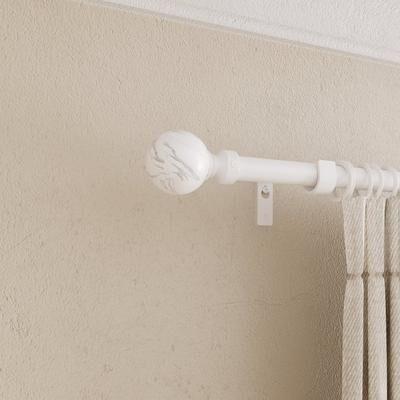
Acroma Adjustable Single Curtain Rod and Coordinating Finial SetElevate your space with minimalist elegance: Adjustable Single-Rod Curtain Rod. Tired of curtain rods that clash with your windows? Fed up with rods that restrict your every move? Our adjustable single-rod curtain rod will transform your experience.42,49 $*Shipping: 0,00 $Secure redirect to the provider
-
Loedds Modern Cloud-Shaped Sofa Set with Wavy Backrests, Coordinating Throw Pillows and Spring Seats, IvoryDescription Bring coordinated seating into your room with this sofa set. The individual pieces create a shared visual style while letting you arrange the seating around the activities and space in your home.1629,99 $*Shipping: 0,00 $Secure redirect to the provider
-
Coordinating Flat Waffle Weave Dish Cloths, Set Of 12 Dish Cloth by T-fal in RedThe all-purpose all-star of any household, this set of 12 T-fal Solid and Stripe Waffle Kitchen Towels ensures a dependable resource is always close at hand. Well-crafted with 100% cotton, these highly absorbent cloths are highlighted by a wondrous...20,99 $*Shipping: 10,98 $Secure redirect to the provider
-
Acroma Adjustable Single Curtain Rod and Coordinating Finial SetElevate your space with minimalist elegance: Adjustable Single-Rod Curtain Rod. Tired of curtain rods that clash with your windows? Fed up with rods that restrict your every move? Our adjustable single-rod curtain rod will transform your experience.46,99 $*Shipping: 0,00 $Secure redirect to the provider


-
What does coordination or coordinating mean?
Coordination or coordinating refers to the process of organizing, synchronizing, and harmonizing different activities or efforts to achieve a common goal. It involves ensuring that all elements work together smoothly and efficiently towards a shared objective. Effective coordination is essential in various settings, such as businesses, organizations, and teams, to maximize productivity and achieve desired outcomes. **
-
What are coordinating and subordinating conjunctions?
Coordinating conjunctions are words that connect two independent clauses or words of equal importance in a sentence, such as "and," "but," "or," "nor," "for," "so," and "yet." They are used to join elements that are grammatically equal. Subordinating conjunctions, on the other hand, are words that connect an independent clause with a dependent clause, indicating a relationship of dependence or hierarchy between the two clauses. Examples of subordinating conjunctions include "because," "although," "since," "while," "if," and "when." **
-
Is it a subordinating or coordinating conjunction?
The word "because" is a subordinating conjunction. It introduces a dependent clause and connects it to an independent clause, indicating a cause-and-effect relationship. Subordinating conjunctions like "because" help to show the relationship between the two clauses and indicate which is more important. **
-
How are coordinating conjunctions formed in a sentence?
Coordinating conjunctions are formed by placing them between two independent clauses or words to connect them. Common coordinating conjunctions include words like "and," "but," "or," "so," "for," "nor," and "yet." These conjunctions help to show the relationship between the two parts of a sentence, whether they are contrasting ideas (but), similar ideas (and), or alternatives (or). **

Are complementary events disjoint?
Complementary events are not necessarily disjoint. Complementary events are two events that together cover all possible outcomes of an experiment. Disjoint events, on the other hand, are events that have no outcomes in common. While complementary events are mutually exclusive, they can still have some outcomes in common, unlike disjoint events. **
What are complementary colors?
Complementary colors are pairs of colors that are located directly opposite each other on the color wheel. When placed next to each other, complementary colors create a strong contrast and enhance each other's intensity. Examples of complementary color pairs include red and green, blue and orange, and yellow and purple. **
Top-Angebote
Products related to Concurrency:
-
Concurrency in C# Cookbook by Stephen Cleary - Non Fiction - PaperbackTitle:. Concurrency in C# Cookbook: Asynchronous, Parallel, and Multithreaded Programming Condition: BRAND NEW. Format: Paperback Overview:. How do seasoned developers tame the complexity of concurrent code in real-world applications? This is the question Stephen Cleary answers with clarity and practical power in Concurrency in C# Cookbook. Now in its updated second edition, the book brings you more than 85 code-rich recipes that reveal how to harness asynchronous programming, parallelism, and multithreading to build responsive, scalable.NET and C# applications. Each recipe pairs concrete, copy-ready code with a thorough discussion of when to apply it, why it works, and common pitfalls to avoid. Whether you’re optimizing a web service, designing a high-traffic API, or building a desktop or mobile app that stays responsive under load, you’ll find dependable patterns that translate into faster, safer, and more maintainable software. Cleary guides you through the nuances of the Task-based Asynchronous Pattern, cancellation, synchronization, dataflow, and threading models, all with the goal of reducing debugging time and delivering robust concurrency solutions. This edition updates techniques for modern libraries and language features in.NET and C# 8.0, helping you stay current while mastering timeless concurrency fundamentals. This is the trusted, hands-on reference that developers reach for again and again. What Makes This Book Stand Out:. What sets Concurrency in C# Cookbook apart is its unapologetically practical approach. Rather than abstract theory, you’ll get tested recipes that solve real problems you’ll encounter day-to-day: coordinating asynchronous work without blocking UI threads, composing multiple asynchronous operations, safely sharing data across threads, and designing responsive services that scale under load. The book blends code-centric solutions with clear explanations of the “why” behind each pattern, so you don’t just copy-paste—you understand how to adapt techniques to your own projects. Readers gain a heuristic toolkit for choosing the right concurrency strategy, from I/O-bound optimizations to CPU-bound parallelism, with guardrails that help avoid deadlocks, race conditions, and subtle performance regressions. Stephen Cleary’s pragmatic voice keeps concepts accessible, even as you tackle increasingly complex scenarios. Who This Book Is Perfect For:. This paperback is ideal for professional developers across the stack—web, cloud, desktop, and mobile—who want concrete, battle-tested strategies for writing concurrent code in C#. It’s equally valuable for team leads and architects looking to standardize approaches to asynchronous operations, as well as for intermediate programmers ready to level up from basic async/await to robust parallel patterns. If you’re building responsive apps, designing scalable services, or teaching concurrency concepts in a classroom, this book provides a durable reference you’ll rely on long after the...99,99 £*Shipping: 0,00 £Secure redirect to the provider
-
Neositrin Complementary Shampoo 100 mlHealth and Beauty Shampoos Neositrin Complementary Shampoo 100 ml Neositrín Shampoo, with quassia amara extract, easily removes lice and nits, leaving hair clean and shiny. It has a pleasant scent and is hypoallergenic.11,28 £*Shipping: 3,99 £Secure redirect to the provider
-
Acroma Adjustable Single Curtain Rod and Coordinating Finial SetElevate your space with minimalist elegance: Adjustable Single-Rod Curtain Rod. Tired of curtain rods that clash with your windows? Fed up with rods that restrict your every move? Our adjustable single-rod curtain rod will transform your experience.42,49 $*Shipping: 0,00 $Secure redirect to the provider
-
Loedds Modern Cloud-Shaped Sofa Set with Wavy Backrests, Coordinating Throw Pillows and Spring Seats, IvoryDescription Bring coordinated seating into your room with this sofa set. The individual pieces create a shared visual style while letting you arrange the seating around the activities and space in your home.1629,99 $*Shipping: 0,00 $Secure redirect to the provider
-
How can one determine the third side of a triangle using the theorem of concurrency?
To determine the third side of a triangle using the theorem of concurrency, one can first identify the point of concurrency of the three angle bisectors or medians of the triangle. Once this point is found, draw lines from this point to the vertices of the triangle to create three smaller triangles. By using the properties of these smaller triangles, one can calculate the length of the third side of the original triangle. This method relies on the fact that the point of concurrency divides the medians or angle bisectors in a specific ratio, allowing for the determination of the third side. **
-
How are coordinating conjunctions formed?
Coordinating conjunctions are formed by joining two independent clauses or words together. They are typically short words such as "and," "but," "or," "nor," "for," "so," and "yet." These conjunctions are used to connect words, phrases, or clauses that have equal importance in a sentence. **
-
What does coordination or coordinating mean?
Coordination or coordinating refers to the process of organizing, synchronizing, and harmonizing different activities or efforts to achieve a common goal. It involves ensuring that all elements work together smoothly and efficiently towards a shared objective. Effective coordination is essential in various settings, such as businesses, organizations, and teams, to maximize productivity and achieve desired outcomes. **
-
What are coordinating and subordinating conjunctions?
Coordinating conjunctions are words that connect two independent clauses or words of equal importance in a sentence, such as "and," "but," "or," "nor," "for," "so," and "yet." They are used to join elements that are grammatically equal. Subordinating conjunctions, on the other hand, are words that connect an independent clause with a dependent clause, indicating a relationship of dependence or hierarchy between the two clauses. Examples of subordinating conjunctions include "because," "although," "since," "while," "if," and "when." **
Similar search terms for Concurrency
-
Coordinating Flat Waffle Weave Dish Cloths, Set Of 12 Dish Cloth by T-fal in RedThe all-purpose all-star of any household, this set of 12 T-fal Solid and Stripe Waffle Kitchen Towels ensures a dependable resource is always close at hand. Well-crafted with 100% cotton, these highly absorbent cloths are highlighted by a wondrous...20,99 $*Shipping: 10,98 $Secure redirect to the provider
-
Acroma Adjustable Single Curtain Rod and Coordinating Finial SetElevate your space with minimalist elegance: Adjustable Single-Rod Curtain Rod. Tired of curtain rods that clash with your windows? Fed up with rods that restrict your every move? Our adjustable single-rod curtain rod will transform your experience.46,99 $*Shipping: 0,00 $Secure redirect to the provider
-
Acroma Adjustable Single Curtain Rod and Coordinating Finial SetElevate your space with minimalist elegance: Adjustable Single-Rod Curtain Rod. Tired of curtain rods that clash with your windows? Fed up with rods that restrict your every move? Our adjustable single-rod curtain rod will transform your experience.49,99 $*Shipping: 0,00 $Secure redirect to the provider
-
Is it a subordinating or coordinating conjunction?
The word "because" is a subordinating conjunction. It introduces a dependent clause and connects it to an independent clause, indicating a cause-and-effect relationship. Subordinating conjunctions like "because" help to show the relationship between the two clauses and indicate which is more important. **
-
How are coordinating conjunctions formed in a sentence?
Coordinating conjunctions are formed by placing them between two independent clauses or words to connect them. Common coordinating conjunctions include words like "and," "but," "or," "so," "for," "nor," and "yet." These conjunctions help to show the relationship between the two parts of a sentence, whether they are contrasting ideas (but), similar ideas (and), or alternatives (or). **
-
Are complementary events disjoint?
Complementary events are not necessarily disjoint. Complementary events are two events that together cover all possible outcomes of an experiment. Disjoint events, on the other hand, are events that have no outcomes in common. While complementary events are mutually exclusive, they can still have some outcomes in common, unlike disjoint events. **
-
What are complementary colors?
Complementary colors are pairs of colors that are located directly opposite each other on the color wheel. When placed next to each other, complementary colors create a strong contrast and enhance each other's intensity. Examples of complementary color pairs include red and green, blue and orange, and yellow and purple. **
* All prices are inclusive of VAT and, if applicable, plus shipping costs. The offer information is based on the details provided by the respective shop and is updated through automated processes. Real-time updates do not occur, so deviations can occur in individual cases. ** Note: Parts of this content were created by AI.